Our History
For more than 25 years, Factotum has helped some of the world’s most successful organizations transform and to become digital first innovators.

Found in Hong Kong in 1996, we worked with organisations to transform there products and services by applying a innovation strateiges, user centred design, and new technology to give our clients an advantage.
We were pioneers in developing and lean start-up approaches, systems thinking and focusing on experience design principles while identifying business value to design and develop solutions at velocity while vectoring into new markets.

VALUE + VELOCITY + VECTOR = DISRUPTION
A framework for innovation and change
We use this framework in business, technology, and innovation contexts to describe the components necessary to create meaningful and transformative change (disruption) in an industry or market. Let’s break it down:
1. Value
Definition: Value means the benefits or solutions offered to customers or society. It’s what makes a product, service, or idea appealing.
Role in Disruption: A disruptive innovation must deliver significant value—either by solving a problem in a novel way, reducing costs, or improving access. Without value, there’s no foundation for change.
2. Velocity
Definition: Velocity is the speed at which ideas, products, or services are developed, delivered, and adopted. It encompasses agility in responding to market needs and opportunities.
Role in Disruption: Rapid execution allows a company or idea to stay ahead of competitors, capitalize on trends, and reach customers faster. Speed is critical in gaining and maintaining a first-mover advantage.
3. Vector
Definition: Vector represents the direction and focus of effort. It’s about aligning resources, strategy, and innovation toward a clear and specific goal or outcome.
Role in Disruption: Without direction, efforts can become scattered and ineffective. A strong vector ensures that velocity and value are channeled purposefully, maximizing the impact.
4. Disruption
Definition: Disruption is the result of combining value, velocity, and vector effectively. It’s the transformative change that alters the status quo, often displacing established players or creating entirely new markets.
Examples:
Uber disrupted transportation by delivering value (convenience, cost-effectiveness), operating with high velocity (quick scaling through technology), and maintaining a clear vector (focus on urban mobility).
Tesla disrupted the automotive industry by combining value (sustainable, high-performance electric cars), velocity (accelerated production timelines), and a clear vector (focus on sustainability and innovation).
This framework underscores that disruption isn’t accidental—it’s a strategic outcome that arises when value, velocity, and vector align effectively. Businesses aiming for disruption must prioritize delivering value, act quickly, and maintain a focused strategy.

Our Purpose
To help people achieve their vision of the future
We believe in creating a vision of the future that is realistic but ambitious using technology to empower an organisation on its transformation journey.
At Factotum, we help organisations in the private and public sectors develop new products and services that meet the changing expectations of people and the needs of society while breaking down cultural barriers to create inclusive experiences.
We help organisations transform by leveraging technology and data so they can unlock value today, to be relevant tomorrow. We call this the power of ‘NOW’ – where we focus on delivering impact and value quickly and then scaling with velocity using lean start-up approaches and agile principles.
We are collective of associates with a common purpose
Factotum is a collective of professionals that have a range of expertise in digital transformation, design strategy, customer experience design, service design, business design, circular design, branding, and marketing.
We are designers, technologists, business experts, and thought leaders with a wealth of knowledge and expertise with a shared vision and common purpose… to be build a bright future.

RIP Douglas Smith
Service Design & Customer Experience Strategy
Our close friend and colleague Douglas Smith passed on June 25th 2025 after battling cancer. We are very saddened and he will be missed.
Douglas was a great friend, an inspiration and an outstanding service designer. We met while at EY-Seren and he had a great career having worked with Engine, Nationwide, EDF, and PublicisSapient among others. He was passionate about ethics, sustainability and delivering great experiences snd solving problems for people.
Douglas leaves behind his wonderful wife Nora and their daughter. We will miss our friend.
.


Peter Fossick – Principal
Digital Transformation & Innovation Strategy
Pete is a digital transformation strategists, futurist and innovation leader with a background in transformation, innovation and design gained while working with IBM, Boston Consulting Group, EY-Seren, and Publicis Sapient among others. His sector experience includes Banking & Financial Services, Gaming, Government Services, Energy, Telecoms, IoT, Sustainability, Web3.0 and the Metaverse


Marcus Kirsch – Principal
Business Design & Organisational Strategy
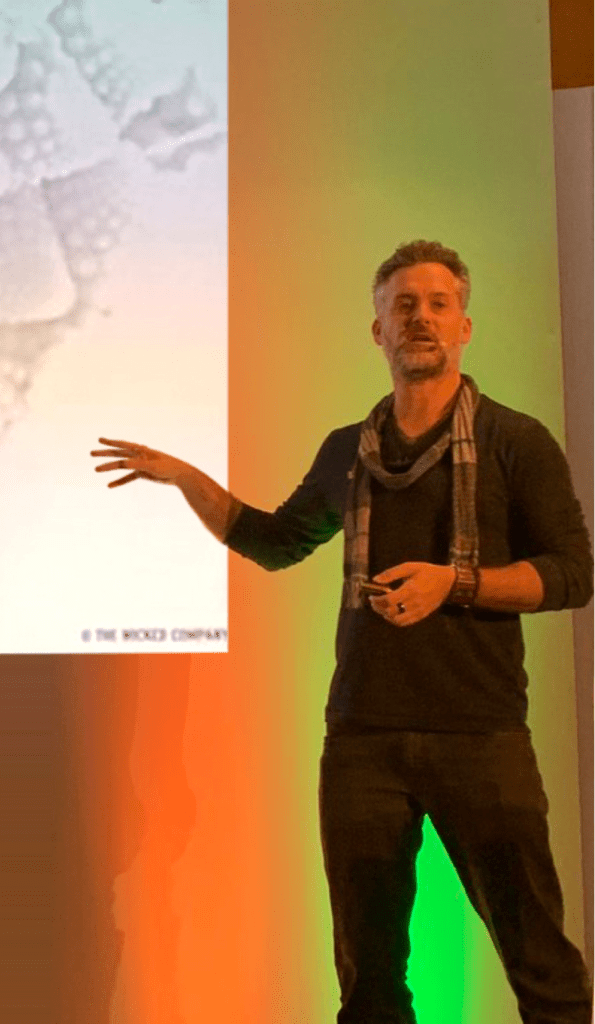
Marcus is a business design leader and service designer with a wealth of experience gained while working with WPP, EY-Seren, HSBC and PublicisSapient among others. He is the author of the ‘The Wicked Company’ and hosts a podcast. His sector experience includes Energy, Banking & Financial Services, Media & Advertising and Healthcare.


Leon Govier – Principal
User Experience & User Interaction Design
Leon is a highly accomplished user interaction and visual designer with a focus on the end-to-end customer experiences. He has been leading UX and UI teams for over 20 years in Online Sports, Gaming, eSports Fintech, Insurance, Healthcare, Education and E-commerce
Leon has considerable experience of designing scalable and robust UI design systems when designing intuitive, usable and accessible for products and services. He is an advocate for, and highly experienced in, developing data driven UX strategies by applying analytics to unlock value throughout the entire user journey to enable customised, relevant offers and experiences using platforms like Adobe Experience Manager and similar content management systems.
His broad experience set has helped many clients to create successful brands where he developed the visual design (UI) of web-based platforms, software and native apps (android, iOS and wearables), created and managed large scale design systems and developed a process that reflects a true understanding of user and business needs.


Mark Stevens – Principal
Design Operations and Hiring
Mark Stevens is an accomplished Design Operations and Hiring Manager with over a decade of experience streamlining creative processes and building high-performing design teams. Known for his strategic mindset and collaborative leadership, Mark develops scalable frameworks that elevate design quality and drive business outcomes.
His expertise spans recruitment, team coaching, and implementing best practices in DesignOps, enabling organizations to deliver exceptional user experiences efficiently. Passionate about nurturing talent and fostering inclusive cultures, Mark combines operational rigor with a keen eye for design excellence. He is dedicated to aligning design capabilities with organizational goals to fuel growth and innovation across diverse sectors.
Our leadership team and associates have a wide range of project experience gained by working with leading corporations